What good is a lean, flat stomach if your back is weak and vulnerable to a blowout?
Without a foundation of functional strength under the facade of “pretty” abs, you are vulnerable to muscle strains, disc hernias, Sciatic nerve pain (leg pain) or other injuries that could knock you out of commission for months.
The Secret of Individualized Progression And Scientific Exercise Sequencing
Whether you’re a beginner or if you have any injuries or physical limitations, you must work though the exercises in the proper sequence to develop muscle control, coordination and stability before moving to the advanced moves for a stronger core. If you don’t even have the basics (crunches) mastered, then following a routine in a magazine at random could be a disaster waiting to happen.
There are literally HUNDREDS variations of exercises you can do for your abs and core providing you with enough variety to keep you engaged and interested for a long time, without getting bored with your Ab workout.
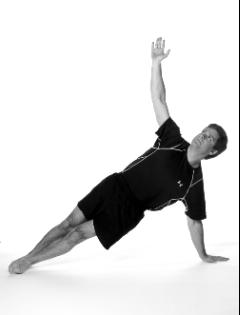
Incorporating core conditioning and stability exercises in your abdominal routine not only will make you midsection stronger they will help you control your stomach muscles better and create a flatter appearance as well.
There are so much more to planks, crunches and reverse crunches for more define abs.
Friday, June 18, 2010


Saturday, June 5, 2010
Interval Training Workout For Your Midsection Will it Work?
Are you in an exercise rut for your stomach? Do you want to kick your fitness level up a notch and increase your endurance? Would you like to add more intensity to you r Abs workout? Interval training is a good way to achieve all of these goals in a safe and systematic approach.
Interval training is simply a matter of alternating high intensity exercise with low intensity exercises. It allows you to get the benefits of the high intensity work while giving the body some rest time in between without stopping. It allows you to extend a workout time period and build endurance gradually.
An example is if you are a runner you would do sprints followed by a slower pace run or jog followed by a faster run again. The same concept can be applied to your abs.
Because interval training burns a lot of calories and provides high-quality muscle work, it may help you save time. If your goal is to burn more calories and tone your midsection, and you are short on time, then interval training does more, faster. Just remember keep your form in check while moving quickly through the exercises.
There are a lot of ways to add intervals to your Abs workout. If you are already have been training for a while try speeding up every other exercise. Or try completing a whole circuit of movements in a shorter time intervals.
Example:
Bicycles
Crunches-fast
Ankle touches
Double knee crunches-faster
Bicycles
Then repeat.
These are just a few ways to kick start your metabolism and help you train your abs.
Good luck and remember to check with your doctor before starting this or any other exercise program
Monday, January 25, 2010
Healthy Eating
Eat Healthy, Stay Healthy" - this is a common saying and it is very unlikely that you have not heard it before. Every one of us wants to stay healthy. To maintain a healthy life, we need a healthy diet, too. Without having a healthy diet, we may not even live that long. But a healthy eating style does not necessarily mean a boring diet. On the contrary, you can add a great variety to your healthy diet and enjoy its delicious flavor.
There is practically no secret about healthy eating. This should be a perfect blend of:
There is practically no secret about healthy eating. This should be a perfect blend of:
Variety
Balance
Regulation
Additionally, you need to promote a healthy lifestyle in terms of maintaining a few useful strategies, such as exercising at your fitness level and stress management to keep you healthy without compromising your taste buds.
Tuesday, January 5, 2010
How to Set Goals in New Year
I got this email request at the end of 2009:
How can I set realistic goals that I can meet?
First, stop setting goals in January! They should be made throughout the year, why overwhelm yourself at the very first week of the New Year?
Set realistic goals that are realistic and you make them fun in some way. You might brainstorm different ways to accomplish the goal or recruit a friend to help you do it. For example, to lose 10 pounds rather than 20 or 30 pounds a realistic goal. Think about how to exercise daily, take up a new workout class, and ask a good friend to be your workout buddy to keep you motivated.
The scheme is to continue a healthy sense of humor: The more rigid or extreme the goal is, the less likely it will be that it will be attractive or attainable. Allow yourself to make mistakes and enjoy the process as much as reaching---or even surpassing--your new goals.
Step 1
List all the projects and goals you would like to complete during the New Year. Don't hold back: This is more of a brainstorming session to get all the ideas out onto paper for you to see them. Try not to censor yourself by limitations of time or budget--simply list the goals.
Step 2
Cluster similar goals together to organize this large register. You might group all exercise- and nutrition-oriented goals together. For example, list these similar projects together: joining a walking group, doing at least 40 minutes of cardio a day, biking one day a week to work, eating fish once or twice per week or cutting back on coffee.
By doing this your goals become more defined, clear-cut, and less overwhelming to complete.
Step 3
Trim your goals to the top 3 most important---or desirable---goals. Think of working on these goals first.
Step 4
Create a specific time frame and action plan for each goal. For example, if you want to run more than 4 miles, check the calendar and determine which days of the week you are most likely to have time to run to reach your goal. It might be two days a week, like Tuesdays and Thursdays.
Step 5
Re-evaluate after a month. After 30 days, if you find you no longer have a burning desire to reach that particular goal replace it with another goal or simply use that surplus time for your other goals.
Keep your sense of humor and keep on Training!
Sunday, December 20, 2009
FIRM AND FLATTEN YOUR ABS FOR THE NEW YEAR
You may have seen fitness cover models with “six pack” abs that looked mighty impressive. However, appearances can be deceiving. “You’re only as strong as your weakest link” is clichéd but true. Without a foundation of functional strength under the facade of “pretty” abs, you are vulnerable to muscle strains, back injuries, leg nerve pain or other injuries that could knock you out of commission for months.
If you’re a beginner or if you have any injuries or other physical limitations, you must work though the exercises in the proper sequence to develop muscle control, coordination and stability before moving to the advanced stuff. If you don’t even have the basics mastered, then following a routine you found in a magazine at random could be a disaster waiting to happen.
There are literally HUNDREDS of exercises you can do for your abs and core. The Key to any program is to provide you with enough variety to keep you engaged and interested for a long time, without giving so many that you feel overwhelmed.
Next make your workouts progressive-the more challenging your workouts the stronger your core will become, you simply jump in at the level based on your current condition. It’s also easy to create additional routines based on the numerous exercises and training principles once you set your mind to do more than crunches in your routine!
Stop doing those outdated and ineffective exercise just lying on the floor.
Stop doing the same abdominal exercises almost everyone is still doing without the results to show or feel that may even cause you back pain.
Why tight hip flexors muscles that run the front of your thighs and tie into your lower back could be preventing you from achieving that flat firm waistline by being over activated every time you work your abs causing major muscular dysfunctions throughout your entire core region and why you need to stretch these muscle groups before working your abs to get stronger firmer midsection.
These are just a few pointers to help you achieve a stronger, firmer core. You can learn many more important topics by staying informed and keep reading and take as much as you can out of book the authors have to share and apply it to your exercise program.
Friday, December 18, 2009
New Year's Resolutions in February?
Every year since I started teaching Pilates reform classes ten years ago, I've devoted the last week of December to making New Year's resolutions. To some of my friends and colleagues, this tradition makes no sense."Why set goals just because every one else is doing so?"
Somebody asked. "It betrays a desperate lack of imagination.""People who make New Year's resolutions don't follow them,"
Someone else pointed out. "It's better not to make commitments In the first place."Isn’t it just a burden involved in making new promises when you are already busy keeping the promises you've made in the past?
Instead of thinking like this, think of resolutions as good habits that you are trying to cultivate. Don't add a good one without dropping an old one. Set realistic goals this year.Goal-setting works. In study after study, productivity experts find that people who set goals achieve more than those who don't.
My own life dramatically changed when I began writing down and prioritizing my goals. And that's true for every one of my friends and clients who have done the same.
In the beginning, I had mixed success. Each year, I'd refine My system a little bit and each year, I managed to accomplish more. In the past two years, I have accomplished at least 90% of what I set out To do - and there's no reason you can't do it too.
I suggest that you establish one significant goal for the year
- Make your goal specific. If possible, make it quantifiable.
- Make your goal realistic.
- Break it down into pieces.
- Establish a time line.
- Allow room for setbacks and distractions.
- Identify your support team.
- Establish a way to reward yourself at the end and on the way.
Why I am I writing about New Years Resolution's in February? Because we are all human and we let pain stop us from achieving our goals and tell ourselves we don’t have the time to commit to ourselves to get in better shape etc.
Well it’s February how are you doing so far this year? Are you stretching daily? Strengthening your core?
It’s never too late to start any type of exercise program that makes you feel better and healthier.
Go for it and don't let anything hold you back!
Muscular Balance and Your Back
Have you ever gone to a doctor or therapist with back, neck, shoulder or other joint pain and heard the infamous words “ You’ll just have to learn to live with it?
If that has been the case this article is for you.
Perhaps you feel fine as long as you don’t run, train your shoulders, play golf or do some other activity you love to do. In most cases, this just doesn’t have to be the case. You need to find a balance. The type of balance I will be discussing here is structural or musculosketal balance. The vast majority of aches and pains are caused by structural imbalances of one or more muscle group and the joints that they connect to. As a result you develop a domino effect because an imbalanced group stress other muscles and joints placing further stress on your body.
Causes of such problems are vast why pulled muscles and joint imbalances place your body in a chronic stage of limited movement. One reason this damage occurs from repeated overstress such as:
These continual patterns causes your body to muscle guard and lock up your movements resulting in chronic pain patterns worsening the imbalance areas over time.
Evaluate the following areas to help prevent these imbalances from occurring in the first place.
Do the same process before working out. Look in the mirror when you begin your movements and make sure that your back is straight and your muscles are relaxed before starting a single repetition and you’ll be on your way to a better workout.
Remember there are over 200 bones that are moved by more then 550 muscles in many directions and are complex it will take time to over come your imbalances, but once you do you will feel and see improvements as a result of your effort.
If that has been the case this article is for you.
Perhaps you feel fine as long as you don’t run, train your shoulders, play golf or do some other activity you love to do. In most cases, this just doesn’t have to be the case. You need to find a balance. The type of balance I will be discussing here is structural or musculosketal balance. The vast majority of aches and pains are caused by structural imbalances of one or more muscle group and the joints that they connect to. As a result you develop a domino effect because an imbalanced group stress other muscles and joints placing further stress on your body.
Causes of such problems are vast why pulled muscles and joint imbalances place your body in a chronic stage of limited movement. One reason this damage occurs from repeated overstress such as:
- Over training certain body parts
- Repetitive movements with the same side of your body in sports
- Poor posture while working out
- Poor posture while sitting at your desk or watching TV
These continual patterns causes your body to muscle guard and lock up your movements resulting in chronic pain patterns worsening the imbalance areas over time.
Evaluate the following areas to help prevent these imbalances from occurring in the first place.
- Look in the mirror and check your standing posture. Are your shoulder rounded forward? Is one shoulder higher then the other? Is your head tilted to one side? Are your arms rotated inward or are your hands relaxed by your side?
- Once noted these postural imbalances, focus on correcting them by relaxing and stretching your muscles.
Do the same process before working out. Look in the mirror when you begin your movements and make sure that your back is straight and your muscles are relaxed before starting a single repetition and you’ll be on your way to a better workout.
Remember there are over 200 bones that are moved by more then 550 muscles in many directions and are complex it will take time to over come your imbalances, but once you do you will feel and see improvements as a result of your effort.
Subscribe to:
Posts (Atom)